Your Dental Website Lists Your Services. But Does It Actually Sell Them?
Ever look at several dental websites in the span of a few minutes? If you're like me, and you spend a considerable amount of time reviewing dental practice websites, you begin to notice something. After a while, many of them start looking remarkably similar. The same lists of services, similar descriptions of procedures, dentist biographies, staff introductions, office photographs, and the familiar invitation to schedule an appointment.
There's certainly nothing wrong with any of these elements. Patients need to know who you are, where you're located, and what services you provide. But in a competitive market, where potential patients may be comparing several practices within minutes, I believe there's a much bigger question worth asking. What makes someone choose your practice over another?
What Is Your Practice Known For?
Most dental websites do a reasonable job of introducing the dentist and staff. They explain educational backgrounds, professional experience, and sometimes personal interests. But what's often missing, particularly on the homepage, is something much more important. What is the practice actually known for? What does the surrounding community associate with your name? Are you particularly experienced in a specific procedure? Does your practice perform a high volume of certain treatments? Have you developed a reputation for helping patients with particular dental concerns?
I sometimes think dentists are hesitant to highlight what they do particularly well because they don't want to appear as though they're bragging. But there's a difference between bragging and helping patients understand your experience. If your practice has extensive experience performing dental implants, surgical extractions, root canal therapy, or another procedure, that information may be exactly what a prospective patient is looking for. Of course, claims about experience and expertise should be accurate and supportable. Not every practice needs to position itself as a specialist in a particular procedure, but every practice should be able to communicate what makes it different.
When a patient arrives on your website, you may have only a brief opportunity to establish credibility and give that person a reason to continue exploring. Your reputation shouldn't be something patients have to discover by accident. If your practice is known for certain procedures, has developed particular clinical capabilities, or has earned the trust of patients within your community, those are important parts of your story worth communicating.
Let's Talk About Pricing
Here's another observation from reviewing dental websites. Pricing information is often difficult to find, if it's available at all. I understand why. Dentistry is complicated, insurance benefits vary, and the actual cost of treatment can depend on several clinical factors. But does that mean patients shouldn't have access to meaningful pricing information?
Think about purchasing a car online. Today, you can research vehicles, compare features, explore financing options, estimate payments, and get a reasonable understanding of what something might cost before ever visiting a dealership. Consumers have become accustomed to having information available before making a purchasing decision. Why should the experience of researching dental treatment be entirely different?
I'm not suggesting that every dental procedure can be assigned one universal price. Clinical examinations, diagnostic imaging, insurance coverage, and treatment complexity can all influence the final cost. But practices can still explain typical price ranges, the factors that affect pricing, available financing options, and what patients should expect during the consultation process. Technology can make presenting this information easier, although any estimates need to be accurate and clearly explained. The objective isn't to replace a clinical examination or provide an exact quote without understanding the patient's needs. It's to reduce uncertainty and help patients feel more comfortable taking the next step.
Sometimes, simply answering a few difficult financial questions before a patient calls can make that first conversation much easier. Patients may be concerned about affordability, insurance coverage, or unexpected expenses, and when those questions go unanswered, they may continue searching for another practice that provides more information.
Answering the Questions Patients Are Afraid to Ask
Pricing is only one part of the equation. Think about a parent researching wisdom teeth removal for their teenager. They're probably not just looking for a dental practice that lists surgical extractions under its services. They may want to understand whether their child will experience pain, what sedation options might be available, how long recovery takes, what complications are possible, and how much the procedure could cost.
Now imagine that parent visits two different dental websites. One website lists "Wisdom Teeth Removal" under its services, followed by a brief description and a phone number. The other explains the procedure, discusses common concerns, describes the consultation process, provides general recovery information, and addresses frequently asked questions. Which website is more likely to help that parent feel informed and comfortable taking the next step?
The same principle applies to dental implants, clear aligners, root canal therapy, and many other procedures. Patients often begin their research with questions, concerns, or fears. Your website has an opportunity to address those concerns before anyone picks up the phone. Providing helpful information doesn't replace a conversation with the dentist, but it can make that conversation more productive because the patient arrives with a better understanding of what to expect.
This is an area where I believe many practices have an opportunity to improve their websites without making significant financial investments. Sometimes the most valuable addition isn't another photograph or a redesigned homepage. It's a thoughtful explanation that addresses what patients are actually wondering about. Patient education is more than simply describing a procedure. It's an opportunity to establish trust and demonstrate that the practice understands the concerns patients bring with them.
Understanding the Patient's Journey
One of the things I frequently ask dentists is a very simple question: "What do you do when you research something?" Usually, that's enough to get them thinking about their own behavior as consumers. We all research products, services, and businesses before making decisions, and dentistry is no different. Patients want information, reassurance, and reasons to feel confident about the choices they're considering.
Consider the typical patient journey. Someone searches Google for a dental procedure near them. Several practices appear in the results, and they begin clicking through websites, comparing information, looking at reviews, and trying to determine which practice feels like the right choice. During that process, they're forming opinions about the experience they might have. Does this practice appear experienced? Can I understand what the procedure involves? Are my concerns being addressed? Can I find information about pricing? Does the practice seem approachable and trustworthy?
And what happens when they visit the practice's social media accounts? Does the information reinforce what they've seen on the website? Does it provide additional education, introduce the people behind the practice, and help establish credibility? When these pieces work together, patients have more opportunities to become comfortable with a practice before making contact. That doesn't guarantee they'll schedule an appointment, but it can improve the chances that they'll take the next step.
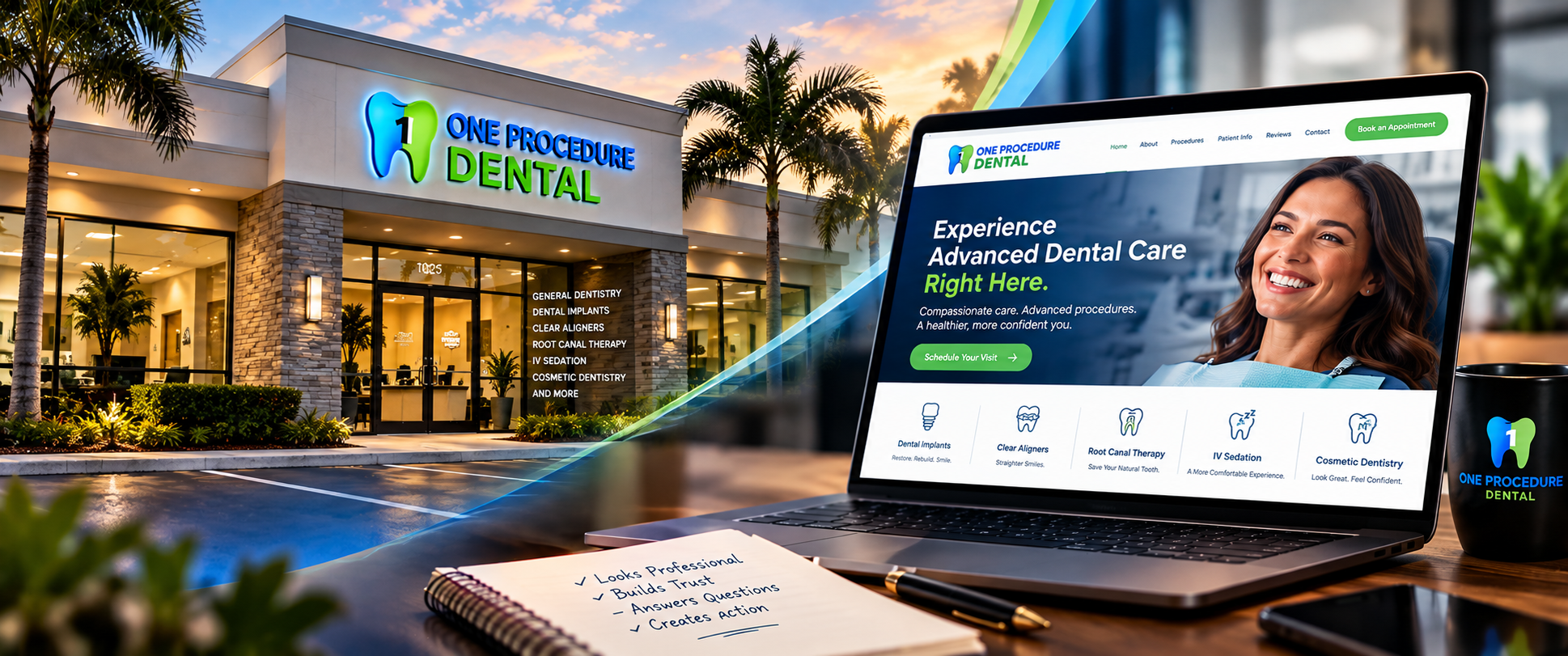
This is why I believe a dental website should be viewed as more than an online brochure. It is often one of the first meaningful interactions a potential patient has with a practice. The information presented, the questions answered, and the confidence created during that visit can influence whether someone continues researching or decides to contact the office.
Take Another Look at Your Website
Dental practices operate in competitive markets. Patients have choices, and those choices are often influenced by information they find long before speaking with anyone at the practice. But improving how your practice communicates doesn't necessarily require rebuilding your entire website or dramatically increasing your marketing budget. Sometimes it begins with taking a second or third look at what you already have and evaluating it from the perspective of someone who has never visited your practice.
Look at your homepage, review your procedure descriptions, read your frequently asked questions, and consider what a patient might be thinking when they arrive on your website for the first time. Are you explaining what makes your practice different? Are you communicating your experience? Are you addressing common concerns about procedures, recovery, and pricing? And are your website and social media working together to tell a consistent story?
At One Procedure Dental, we believe that understanding how a specific procedure is positioned within a practice is an important part of identifying opportunities for growth. Before investing more money in advertising, it's worth examining whether the information patients are already finding is helping them make informed decisions. A website shouldn't simply be a digital list of everything your practice offers. It should help patients understand what you do, why it matters, and whether your practice may be the right fit for their needs.
And perhaps the most important question every dentist should ask is this:
"Does the community really know what we do in this practice?"